 Flash News
Where does justice begin?/ Between Gog's speeches and the bullets on the ground, who protects the policeman?
Pëllumb Gjoka speaks about the accusations in the "Metamorphosis" file: They held a public trial for me, I have no connection to the murder of Gjin Ndoji
The injured officer in Korça arrives at Trauma, has received wounds to the jaw and neck
Scandal at QSUT/ Cardiology operating room out of order, patients are sent to private hospitals
Four ways your attention is manipulated
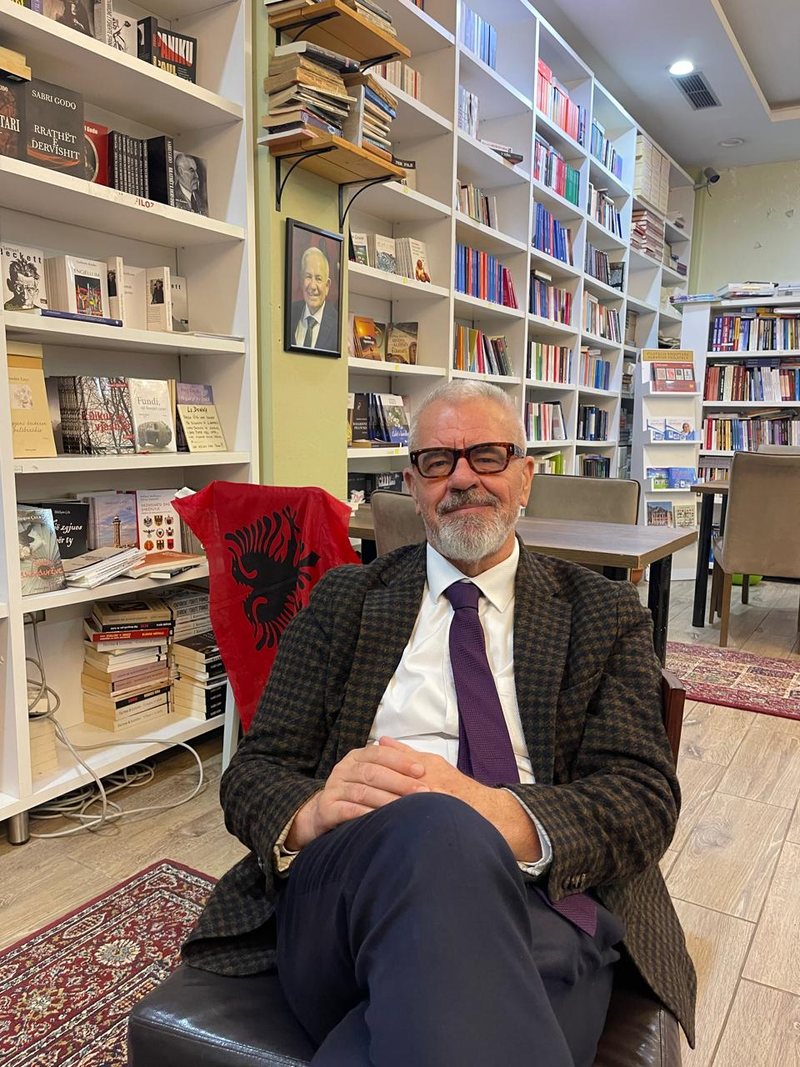
Albert Rakipi
In April 2026, Fincantieri, one of Italy’s leading industrial and defense companies, signed an agreement with the Albanian state-owned company KAYO to manufacture vessels at the Pashaliman naval shipyard. Prime Minister Edi Rama presented the project as part of a strategic partnership with Italy, stating that the new company would produce ships not only for Albania’s Armed Forces but also for allied militaries.
Fincantieri is not an ordinary investor. It is one of Italy’s national industrial champions, comparable in strategic importance to Leonardo in defense or ENI in energy. It is central to Italian shipbuilding, maritime manufacturing, naval technology, and defense industrial policy. Its presence in Albania, therefore, carries a significance that goes far beyond a business agreement. It places Albania within a new industrial and security geography.
But if developed seriously, Pashaliman could become more than a shipyard. It could become the symbol of a new Italian approach to Albania: from crisis management to industrial partnership; from border control to maritime production; from migration anxiety to defense cooperation; from viewing Albania as a fragile neighbor to viewing it as a capable ally in the Adriatic, the Mediterranean, and NATO’s southeastern flank.
This is why Fincantieri’s arrival should not be read merely as a business development. It should be understood as a strategic opportunity: can Italy finally begin to see Albania not simply as a nearby country that needs stabilization, but as a partner with which it can build influence, security, and industrial capabilities in the Adriatic, the Mediterranean, and beyond?
For more than three decades after the fall of communism, Albanian-Italian relations have carried a profound paradox. No other European country has been closer to Albania in terms of geography, history, culture, migration, trade, security, and political imagination. Yet few relationships have remained so consistently below their strategic potential.
Italy was Albania’s first window to the West. During the long decades of communist isolation, Italian television, language, music, culture, and lifestyle shaped Albania’s image of Europe more than any official doctrine. For many Albanians, Italy was not simply a neighboring country across the Adriatic. It was the visible West, accessible Europe, the natural partner for Albania’s post-communist rebirth.
This explains why expectations after 1990 were so high. It also reflected a deeper moral disappointment. In the early 1990s, Ismail Kadare argued that Italy had remained silent for too long in the face of Albania’s suffering under one of Europe’s harshest communist regimes. Through Italy, Kadare was in fact addressing the West itself, because for Albanians Italy had always been the closest image of that West. The hope was that, after decades of silence, Italy would now care for Albania almost as an elder brother.
Italy responded generously in those early years. It provided assistance, supported institutional reconstruction, backed Albania’s Euro-Atlantic path, and became one of the most influential foreign voices in Tirana. Yet Italy’s view of Albania was always more ambivalent than Albania’s view of Italy.
After the collapse of communism, Albania was not seen in Rome primarily as an economic opportunity or as a future strategic partner. Above all, it was viewed as a potential source of instability. The first migration waves, weak state institutions, organized crime, trafficking networks, and the political fragility of the 1990s turned Albania into a security concern. In Italian strategic thinking, the country across the Adriatic was not perceived as a place for long-term projects, but rather as a source of risks that needed to be managed and contained.
This perception reached its peak in 1997, when the Albanian state nearly collapsed following the pyramid scheme crisis. Italy led Operation Alba, the multinational mission that helped restore order. It was a decisive and necessary intervention. It also demonstrated that Italy could play a major role in Albania when it chose to do so. But the intervention reinforced a doctrine that would shape the relationship for years: Albania was treated as an unstable neighbor that needed stabilization, not yet as a serious partner that needed development.
The problem is that this logic continued even after Albania changed. Albania stabilized. It joined NATO. It became a reliable regional security partner and aligned itself with the Euro-Atlantic agenda. It no longer represented the kind of emergency that had haunted Italian policymaking in the 1990s. Yet the mental map in Rome changed more slowly than reality on the ground. The relationship remained close, friendly, and useful, but too often reactive, cautious, and modest.
This brings us to the present. The central question today is whether Italy has truly moved beyond the old doctrine of threat management toward a doctrine of strategic opportunity.
The answer remains unclear.
Politically, Albania and Italy enjoy excellent relations. There are no bilateral disputes between the two countries. They share broadly aligned positions on foreign policy and security. Italy supported Albania’s accession to NATO and has consistently backed its European integration. Albania sees Italy as one of its principal advocates within the European Union. The human dimension is even deeper: more than half a million Albanians live and work in Italy, creating one of the strongest social bridges between the two countries.
Albania, for its part, has repeatedly demonstrated extraordinary trust toward Italy. The most recent and politically sensitive example is Tirana’s acceptance of the controversial agreement on Italian migrant processing centers in Albania—an arrangement that Albania has not offered to any other European country. Whatever one’s view of the agreement, it demonstrates the extent to which Albania is willing to accommodate Italy’s strategic and domestic concerns.
Yet the economic and industrial dimension tells a more complicated story. Italy remains one of Albania’s most important trading partners. Italian companies are present across many sectors. Cultural, commercial, and human ties are dense. Yet for a relationship so often described as strategic, the profile of Italian investment in Albania has been surprisingly limited.
Most Italian presence has been concentrated in trade, services, small and medium-sized enterprises, contract manufacturing, restaurants, cafés, and other low- to medium-value activities. These are important, but they do not constitute a strategic partnership. Today, in the hierarchy of strategic foreign direct investment in Albania, Italy does not rank among the top five actors, where Hungary, Turkey, the Netherlands/Switzerland, and even distant Canada stand out.
A strategic relationship requires investment in strategic sectors: defense industries, energy, ports, infrastructure, the maritime economy, logistics, transport corridors, advanced manufacturing, technology, education, and vocational training.
Rebuilding a strategic relationship in education would, in a sense, mean going “back to the future.” One need only recall the Albanian scientists of the 1930s and 1940s who studied in Rome and Turin, among them Professor Selaudin Toto, a distinguished scientist educated in Italy and founder of Albania’s Institute of Sciences. He was not alone. Education, like industry and security, must return to the center of a strategic Italian policy toward Albania. This requires more than exchange; it requires transformation. It requires more than proximity; it requires vision.
This is precisely why the Fincantieri project matters. It offers an opportunity to move beyond the old model. Instead of another chapter of symbolic friendship or routine economic presence, it could become the first pillar of a different kind of relationship: industrial, maritime, technological, and strategic.
Such a shift would also serve Italy’s own interests.
For years, Italy has struggled with the question of its role in the Balkans and the wider Adriatic-Mediterranean space. At times, Rome viewed the region through a fragmented lens, focusing heavily on Serbia as a kind of Schwerpunkt, the central axis of Balkan stability. For economic and strategic reasons, this approach was understandable, but it often leaned toward preserving the status quo, including support for the continuity of Yugoslavia and, later, a cautious approach toward the Milošević regime.
In the long run, this weakened Italy’s ability to act as an agent of regional transformation. Italy has often worked through EU mechanisms and intervened during crises, but it has rarely articulated a sustained regional vision.
Yet Italy’s geography demands such a vision. A country that wishes to remain strategically relevant in the Mediterranean cannot treat the Adriatic and the Western Balkans as peripheral spaces.
On the map of strategic investment in the Balkans, Albania is not the only country where Italy is absent as a leading strategic actor. The same is true in Serbia, the region’s largest investment market, where Italy, despite remaining a significant and established investor, ranks only fourth or fifth behind more aggressive players such as China, Russia, and others.
From a geopolitical perspective, the vacuum created by the lack of a stronger Italian presence is rapidly being filled by third powers.
A truly strategic Italy needs a serious Balkan policy. And any serious Italian Balkan policy must place Albania close to its center.
Albania offers Italy something few countries in the region can simultaneously provide: geographic proximity, deep cultural affinity, a strong diaspora in Italy, political goodwill, NATO membership, a pro-European orientation, a long coastline, ports, maritime infrastructure, and a consistent willingness to cooperate with Rome.
It is difficult to imagine a more natural platform for an Italian strategy in the southeastern Adriatic.
This is where the idea of a new Italian Ostpolitik becomes relevant again. Italy needs a policy that does not simply react to crises in the Western Balkans but projects long-term influence through integration, investment, industrial cooperation, security partnerships, and support for EU enlargement.
Such a policy would not be nostalgic geopolitics. It would be modern geoeconomics and strategic statecraft.
The Western Balkans are no longer merely a zone of instability to be managed. They are part of Europe’s security architecture, part of the debate on EU enlargement, and part of NATO’s southeastern space. They are also part of the competition over infrastructure, energy, ports, digital networks, supply chains, and foreign influence.
In this environment, Italy cannot afford a small policy toward Albania.
Nor can Albania afford a passive policy toward Italy.
For too long, Albania has relied on the assumption that geography, history, and affection would naturally produce a strategic relationship with Italy. They have not.
Affinity is not a strategy. Migration is not a strategy. Trade alone is not a strategy. Even friendship is not a strategy unless it is translated into projects, institutions, and long-term commitments.
That is why Albania must define more clearly what it wants from Italy. It should approach Rome not only through the language of gratitude, cultural proximity, or support for European integration. It should offer concrete strategic platforms: maritime industry, defense manufacturing, port development, energy cooperation, vocational education, university partnerships, infrastructure corridors, and joint regional initiatives.
The Fincantieri project can become the foundation of such a platform. But only if Albania builds around it the necessary ecosystem: technical schools, engineering capacity, maritime training, defense procurement planning, port modernization, transparent regulation, and protection from clientelist interference—above all, by setting aside short-term political interests tied to power.
If Albania wants to be treated as a strategic partner, it must behave as a strategic state.
The old formula of Albanian-Italian relations was built on proximity, emotion, and emergency. The new formula must be built on industry, security, technology, and shared geopolitical purpose.
For decades, Italy asked what risks might come from Albania: migration, instability, crime, weak borders. These were legitimate concerns, especially during the 1990s. But they were defensive concerns. They answered the question of what Italy feared from Albania, not what Italy could build with Albania.
Now the question must be reversed.
What can Italy and Albania build together?
They can build a maritime industrial hub in the Adriatic. They can build a model of NATO defense cooperation. They can build a stronger southern axis for European integration. They can connect Italian industrial capacity with Albanian geography and human capital. They can transform Albania from a peripheral neighbor into a strategic platform for Italy’s role in the Balkans and the Mediterranean.
But this requires political imagination on both sides.
Italy must stop seeing Albania primarily through the old categories of migration, borders, and risk. Albania must stop waiting for Italian attention as though historical proximity alone were sufficient.
Strategic partnerships are not inherited.
They are built.
For now, the Fincantieri project remains part of a strategic political imagination shared by both sides. The same could be said of the Italy–Albania–United Arab Emirates renewable energy agreement and the Vlora–Puglia undersea interconnector project, worth roughly €1 billion, signed in 2025 with the participation of Italy’s Terna and the UAE’s TAQA.
But political imagination alone is not enough.
As an Albanian proverb says: between saying and doing lies an entire sea.
King Zog once wrote that he was not afraid of a strong Italy; he was afraid of a weak Italy. A strong Italy, he argued, is an Italy that wants a stable, organized, and independent Albania.
That idea remains remarkably important today.
But it should now be taken one step further.
A truly strategic Italy sees Albania not merely as stable and independent, but as useful, capable, and indispensable.
*Albert Rakipi, Institute for International Studies. His latest book is The Perils of Change: Albania’s Foreign Policy in Transition.
Latest news




Video/View from the scene where the policeman was killed in Maliq
2026-06-04 11:52:46


SPAK knocks on Igli Tare, former footballer included in Balluku file
2026-06-04 11:16:36


Four ways your attention is manipulated
2026-06-04 10:52:57
Policeman's murder, Bardhi reacts: Shocked, I strongly condemn the serious act
2026-06-04 10:30:35
Parliament holds a minute of silence for the officer killed in Maliq
2026-06-04 10:25:48


Photos of two young men who drowned in the sea in Lezha emerge
2026-06-04 09:44:40

What anxiety is really trying to tell you
2026-06-04 09:24:37


Maliq/ Officer killed during police operation, another injured
2026-06-04 08:31:21
Horoscope, get to know the star forecast
2026-06-04 08:21:37
Unstable weather conditions, weather forecast for this Thursday
2026-06-04 08:06:35
Morning Post/ In 2 lines: What mattered yesterday in Albania
2026-06-04 07:50:52


Tension in "Air Albania" after Israel's goal, Hysaj clashes with Gloukh
2026-06-03 22:21:33
Debutim i hidhur për Maran, Shqipëria mposhtet nga Izraeli
2026-06-03 22:01:35
Këlliçi: Rama është sot një Kryeministër i ezauruar totalisht
2026-06-03 21:38:01
Costa porosit liderët: BE-ja s’mund të bëjë detyrat e shtëpisë të Kosovës
2026-06-03 21:16:35
6 në 10 persona përdorin AI për shëndetin mendor
2026-06-03 20:56:11
Tifozët kuqezinj fërshëllejnë himnin izraelit
2026-06-03 20:34:01
"Resign, we want revolution", citizens chant outside Rama's office
2026-06-03 19:58:32
The two young men who lost their lives in Shëngjin are identified
2026-06-03 19:43:35
Official lineups for the Albania-Israel friendly are published
2026-06-03 19:18:56
Video/ Police throw water on the crowd, protesters break the metal fence
2026-06-03 18:59:00
The best professions for free time and less stress
2026-06-03 18:48:43
The Federation of North Macedonia excludes Shkëndija Tetovo from the Cup
2026-06-03 18:16:04
Blow for Broja, his value on "Transfermarkt" drops to 5 million euros
2026-06-03 17:53:09
Bulqiza miners in protest, miners demand improved working conditions
2026-06-03 17:29:39


Trump admits clash with Netanyahu: I asked him to stop the escalation in Lebanon
2026-06-03 16:30:32
By 2030, 45% of women are expected to be single and childless
2026-06-03 16:19:53


Alarm for the Rossoneri! Uzun risks the challenge against Israel
2026-06-03 15:52:21
Two people were injured by a bomb explosion in Përmet, police provide details
2026-06-03 15:35:24

The heat wave does not spare Spain, 101 people lost their lives in May alone
2026-06-03 15:09:35
Hearing for the defendants in the Veliaj case, SPAK gives its claim
2026-06-03 14:56:31

Murder of Martin Can, Appeal decision for Mario Përlleshaj postponed
2026-06-03 14:18:24
Can hackers steal fingerprints from photos on social media?
2026-06-03 14:02:14

Explosion in Përmet, two people seriously injured, one urgently sent to Tirana
2026-06-03 13:41:21
Berlin signals opening of Europe-Russia talks on Ukraine
2026-06-03 13:27:09
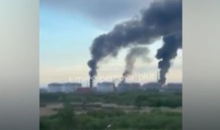
Explosions at oil terminal, footage from the attack in St. Petersburg
2026-06-03 13:01:14
CNN: US-Iran ceasefire is straining, oil prices rise again
2026-06-03 12:42:57


Albania becomes the second most expensive in the Balkans for daily rentals
2026-06-03 12:13:35

Berisha on the trial against Meta: Political farce ordered by Rama
2026-06-03 11:36:15
Accident in Levan-Tepelena, car ends up in canal
2026-06-03 11:16:34



Antonio Costa in Kosovo today, meets Haxhiu, Kurti and party leaders
2026-06-03 10:18:56
'1 million lek to put a cell phone in prison', Beci: 'Flash' checks to seize it
2026-06-03 10:06:29

Horoscope June 3, 2026, discover the star predictions
2026-06-03 09:51:56
Traumat në fëmijëri lënë gjurmë në tru
2026-06-03 09:34:20
Bank robbery in Tirana, guard arrested: He did not act to neutralize the robber
2026-06-03 09:23:25


Foreign exchange/ How much foreign currencies are bought and sold today
2026-06-03 08:25:50
Long note for those who can't read
2026-06-03 08:03:50

33 degrees Celsius in some areas, as the weather forecast is for today
2026-06-03 07:25:07
Morning Post/ In 2 lines: What mattered yesterday in Albania
2026-06-03 07:01:04
American professor: US priority for Albania remains security and the rule of law
2026-06-02 23:01:00



Appeal removes Ergys Agas' apartment from seizure
2026-06-02 20:39:08